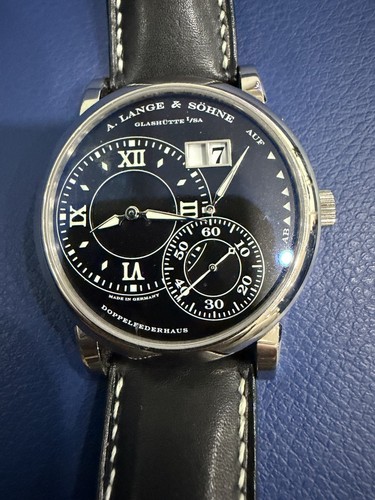
 Chrono
A. Lange & Söhne
Datograph Up/Down
★★★★★
41mm·Manual
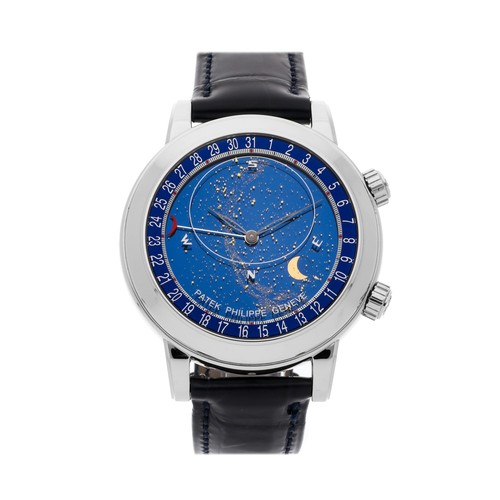
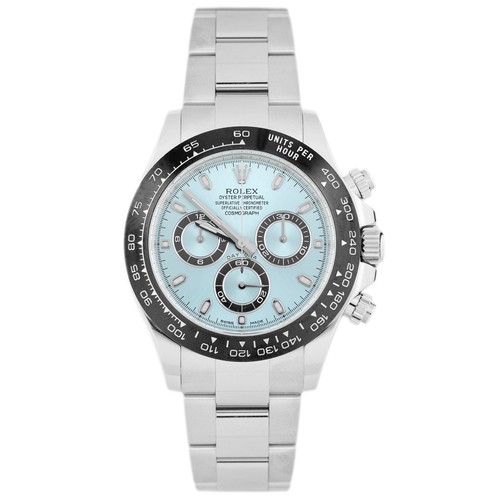
Platinum is the rarest and densest case material in serial-production luxury watchmaking. A platinum case weighs roughly 60% more than gold of the same dimensions and 2.4x more than steel — a platinum Daytona on a leather strap feels unmistakably different from any other watch on your wrist. The metal is 950 Pt (95% platinum, 5% iridium or ruthenium), compared to 18k gold's 75% purity.
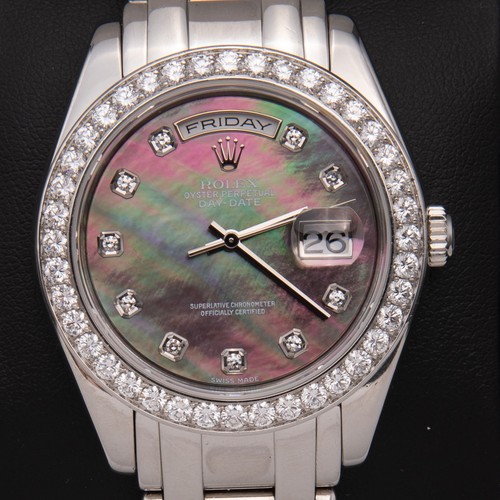
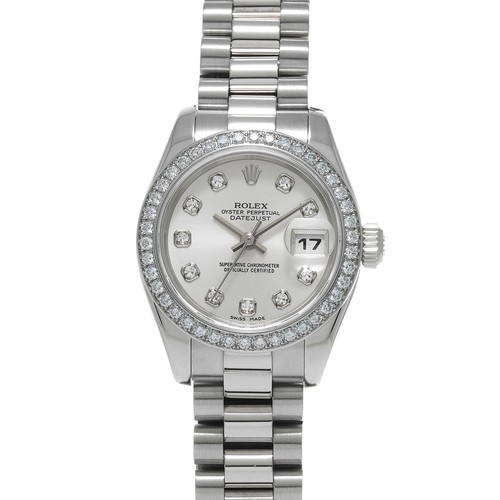
Platinum watches are a subtle flex — visually, the metal reads like a warm gray that can be mistaken for white gold or steel from a distance. This is intentional. Patek Philippe marks platinum cases with a small diamond set into the lug between 5 and 6 o'clock. Rolex platinum Day-Dates and Daytonas are distinguishable by their specific ice-blue dials unique to platinum references. Lange's platinum Datograph and 1815 are among the most sought-after dress watches of the modern era.
The downside is cost. Platinum adds $20,000–60,000 to the retail price of a reference over its gold equivalent, and that premium does NOT fully hold on the secondary market — platinum Rolex sports often trade below steel versions despite the higher MSRP. Platinum makes sense for dress watches where you want maximum material prestige and a lifetime piece, less for flipping. The metal is also harder to work than gold, which is why platinum watches tend to come from the handful of makers with platinum finishing expertise.
6
Watches
4
Brands
26-44mm
Size Range
A. Lange & Söhne Datograph Up/Down
vs
Breitling Chrono Cockpit
A. Lange & Söhne Datograph Up/Down
vs
Audemars Piguet Royal Oak Chronograph
A. Lange & Söhne Datograph Up/Down
vs
Audemars Piguet Royal Oak Offshore Safari
A. Lange & Söhne Datograph Up/Down
vs
Breitling Chronomat
A. Lange & Söhne Datograph Up/Down
vs
Breitling Chrono-Matic
A. Lange & Söhne Datograph Up/Down
vs
Blancpain Fifty Fathoms Flyback Chronograph