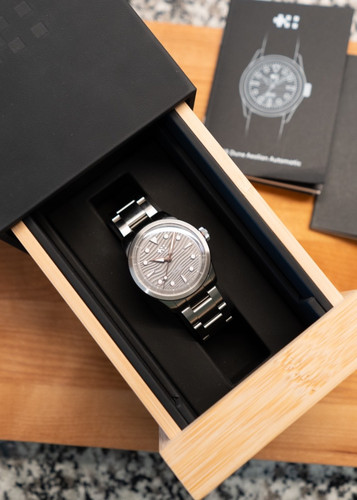
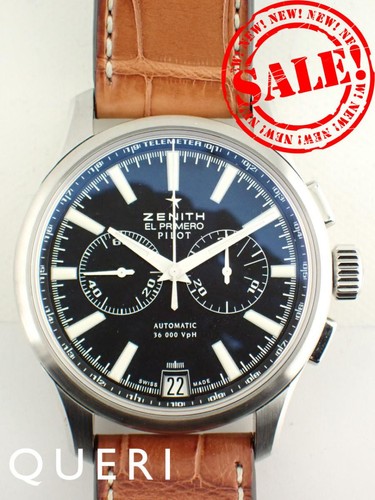
 Pilot
PilotZenith
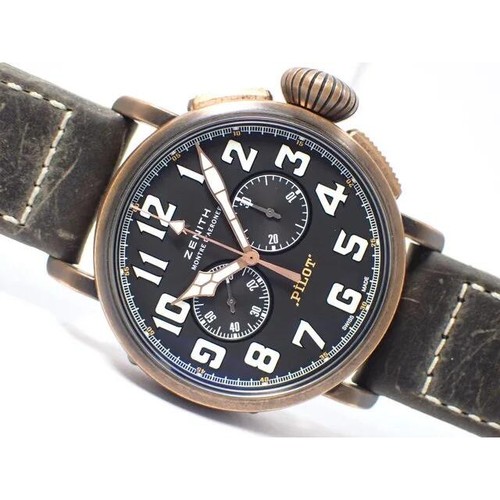
Pilot Type 20 Extra Special
★★★★★
40mm·Auto
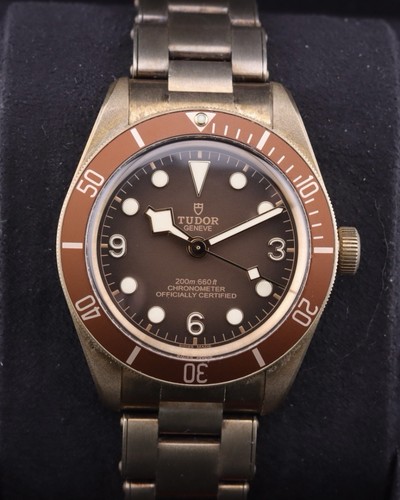
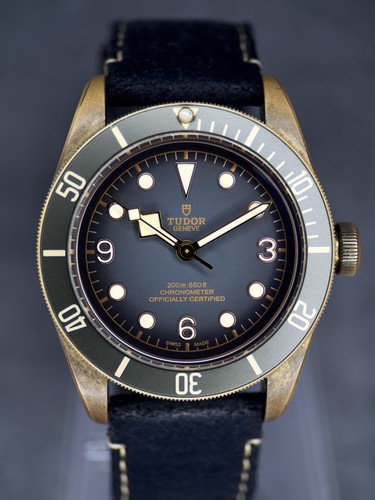
Bronze watches develop a patina — a brown-green oxidation layer that forms uniquely on every wrist based on sweat, humidity, and wear patterns. No two bronze watches age the same way. The material traces its watchmaking relevance to naval and diving instruments — bronze was the traditional material for ship fittings and diving helmets because it resists saltwater corrosion while slowly developing a protective oxide layer.
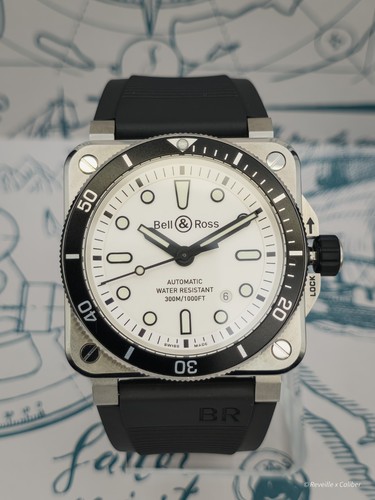
The modern category was defined by the Panerai Luminor Submersible 1950 Bronzo PAM 507 in 2011, which established bronze as a luxury material rather than merely a curiosity. The Tudor Black Bay Bronze, Oris Divers Sixty-Five Bronze, and Bell & Ross BR 03-92 Diver Bronze are the most accessible references. High-end bronze watches use aluminum-bronze or CuSn8 marine-grade alloys that patina predictably and can be polished back to near-factory condition if desired.
Bronze watches are not for everyone. The green patina looks striking to some and like tarnish to others. The material is heavier than steel (roughly 10% denser) and softer — it dents rather than scratches. For buyers who want a watch that ages visibly and becomes uniquely theirs, bronze is the only case material that changes daily. For buyers who want a pristine finish indefinitely, steel or ceramic is the better choice.
6
Watches
4
Brands
39-45mm
Size Range